What Causes Canker Sore – Triggers, Risks and Prevention
Canker sores, medically termed aphthous ulcers or aphthous stomatitis, rank among the most prevalent oral health complaints. These small, shallow lesions develop exclusively on the soft tissues inside the mouth or at the gum base, producing significant discomfort despite their contained size. Unlike viral infections, they remain isolated to internal mucosal surfaces and never manifest on the external lip skin.
Understanding what triggers these painful ulcers requires examining a complex interplay of biological and environmental factors. While medical science has not identified a singular causative agent, research consistently links outbreaks to specific nutritional deficiencies, physical traumas, and immune system responses. For a complete examination of prevention strategies and clinical treatments, see the Comprehensive Guide to Canker Sores.
The condition affects approximately 20% of the population, with recurrences troubling many individuals throughout their lives. Distinguishing between these benign ulcers and contagious viral infections proves essential for proper self-care and preventing unnecessary anxiety about disease transmission.
What Causes Canker Sores?
Common Causes
- Physical mouth trauma
- Vitamin deficiencies (B12, folate, iron)
- Emotional stress
- Hormonal fluctuations
Key Triggers
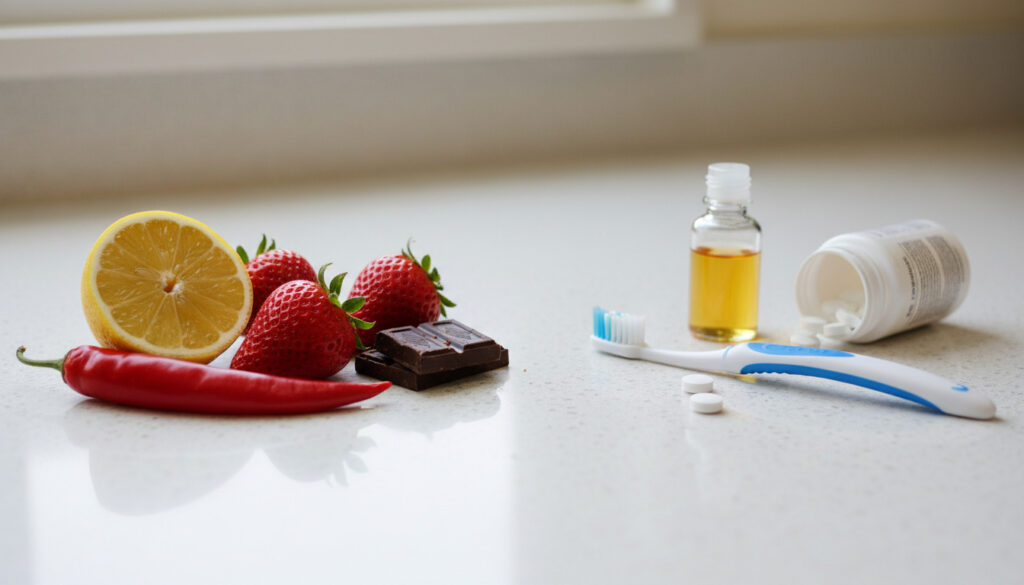
- Acidic and spicy foods
- Sodium lauryl sulfate products
- Minor dental injuries
- Allergic responses
Risk Factors
- Family history of ulcers
- Immune system conditions
- Inflammatory bowel disease
- Female gender (higher incidence)
Prevention Tips
- Maintain balanced nutrition
- Use SLS-free dental products
- Practice stress management
- Avoid known food irritants
- Multifactorial origins: No single cause explains all cases
- Non-contagious nature distinguishes them from herpes simplex infections
- Recurrence affects 20-40% of patients
- Strong correlation with vitamin B12, zinc, folate, and iron deficiencies
- Associated with Helicobacter pylori bacterial presence in some studies
- Hormonal fluctuations during menstrual cycles frequently initiate outbreaks
- Typically benign, with cancer risk remaining extremely rare
| Fact | Details |
|---|---|
| Medical terminology | Aphthous ulcer, aphthous stomatitis |
| Population prevalence | Approximately 20% |
| Typical duration | 7–14 days |
| Contagious status | Non-contagious |
| Cancer association | Rare; usually benign |
| Recurrence rate | 20–40% experience repeated episodes |
| Peak demographic | Teens and young adults |
| Gender distribution | Slightly higher incidence in women |
| Location | Internal soft tissues only |
| Pain duration | Subsides after 3–4 days typically |
Are Canker Sores Contagious?
How They Differ From Cold Sores
Cold sores, caused by the herpes simplex virus, appear on the external lip surface and around the mouth border. These viral lesions spread through direct contact with fluid from the blisters. Canker sores, however, develop exclusively inside the mouth on soft tissues such as the inner cheeks, tongue, soft palate, and gum base. This fundamental anatomical distinction reflects their different etiologies—canker sores result from local tissue reactions rather than viral infection.
According to the Mayo Clinic, the non-contagious nature of aphthous ulcers means they do not spread through kissing, shared utensils, or oral contact. This characteristic provides significant relief to sufferers who might otherwise worry about transmitting the condition to family members or partners.
Why Canker Sores Cannot Spread
The absence of a viral or bacterial infectious agent explains why canker sores pose no transmission risk. Research from the National Institute of Dental and Craniofacial Research confirms that these ulcers represent an inflammatory response rather than an infectious disease. They cannot spread between individuals through any form of contact, including shared food, beverages, or oral hygiene implements.
Family members need not isolate or use separate dining utensils when someone develops a canker sore. The condition poses zero risk of cross-infection, distinguishing it clearly from cold sores or streptococcal infections.
How Long Do Canker Sores Last?
Typical Duration and Recovery
Most aphthous ulcers follow a predictable healing trajectory. According to dental specialists, the lesions typically resolve independently within one to two weeks. Pain intensity usually diminishes significantly after the first three to four days, even before visual healing completes. Minor sores measuring less than one centimeter often heal faster than major ulcers, which can exceed one centimeter and may require extended recovery periods.
The healing process involves gradual epithelial regeneration, with the white or yellowish center fading as surrounding inflammation subsides. Clinical observations indicate that trauma-induced sores often heal faster than those triggered by systemic nutritional deficiencies, which may persist until the underlying deficit resolves.
Treatment Approaches
Over-the-counter options include topical anesthetic gels containing benzocaine or topical corticosteroids that reduce inflammation. Antimicrobial mouth rinses help prevent secondary bacterial infection during the open-ulcer phase. Prescription treatments become necessary for severe or persistent cases, with dentists often recommending stronger corticosteroid preparations or sucralfate suspensions that form protective coatings over the lesion.
Avoiding spicy, acidic, or abrasive foods during active outbreaks prevents additional tissue irritation. Rinsing with warm salt water or baking soda solutions may provide temporary comfort, though these measures do not accelerate the underlying healing process.
When Should You Consult a Doctor?
Warning Signs of Complications
While most canker sores resolve without intervention, specific characteristics warrant professional evaluation. Sores persisting beyond two weeks, unusually large lesions exceeding one centimeter, or clusters of multiple simultaneous ulcers may indicate underlying systemic conditions. Difficulty eating or drinking due to pain, or the presence of fever alongside oral ulcers, similarly requires medical assessment.
According to Cedars-Sinai Medical Center, frequent recurrences—defined as monthly or more frequent outbreaks—suggest the need for comprehensive evaluation. Such patterns may reveal hidden nutritional deficiencies, autoimmune disorders, or gastrointestinal conditions like Crohn’s disease or ulcerative colitis.
Associated Systemic Conditions
Immunocompromised individuals, including those with HIV/AIDS or undergoing chemotherapy, face higher susceptibility to severe or persistent oral ulcers. Inflammatory bowel diseases, celiac disease, and Behcet’s disease frequently present with recurrent aphthous stomatitis as an early symptom. Clinical guidelines recommend thorough investigation when sores accompany gastrointestinal distress, genital ulcers, or unexplained weight loss.
Seek immediate dental or medical care if sores do not heal within 14 days, if pain prevents adequate hydration, or if lesions spread to the lips or skin—characteristics suggesting alternative diagnoses such as erythema multiforme or pemphigus vulgaris.
What Is the Day-by-Day Healing Process?
-
Days 0–1: Initial tingling or burning sensation precedes visible lesion formation. The tissue may appear slightly reddened or swollen before the characteristic white or yellow center develops.
Source: Michael Herrera DDS -
Days 2–4: The ulcer reaches maximum size and pain intensity. The center appears white or yellowish-gray, surrounded by a bright red inflammatory halo. Eating and speaking may cause significant discomfort during this peak phase.
Source: James Family Dentistry -
Days 5–10: Pain subsides considerably as healing progresses. The ulcer center gradually flattens and shrinks, with the surrounding redness fading. New tissue begins regenerating from the edges inward.
Source: National Institute of Dental and Craniofacial Research -
Days 10–14: Complete resolution occurs for typical minor sores. The mucosal surface returns to normal appearance without scarring. Major ulcers or those complicated by secondary infection may extend beyond this timeframe.
Source: WebMD
What Is Definitively Known About Canker Sore Causes?
| Established Factors | Uncertain or Developing Research |
|---|---|
| Physical trauma (biting, toothbrush abrasion, dental work) | Exact immune mechanism linking stress to ulcer formation |
| Deficiencies in vitamin B12, folate, iron, and zinc | Genetic predisposition variations among populations |
| Sodium lauryl sulfate in oral care products | Precise hormonal pathways triggering menstrual cycle outbreaks |
| Acidic and spicy food triggers | Role of specific oral microbiome compositions |
| Association with inflammatory bowel diseases | Why some individuals develop immunity over time while others do not |
| Stress as a precipitating factor | Variable efficacy of vitamin supplementation across different patients |
Who Faces the Highest Risk?
Women experience slightly higher incidence rates than men, particularly during hormonal fluctuations associated with menstruation, pregnancy, or menopause. Adolescents and young adults between ages 10 and 40 demonstrate peak vulnerability, though first occurrences can appear at any age. Family history significantly influences susceptibility, suggesting genetic predispositions affecting immune response or tissue repair mechanisms.
Individuals with compromised immune function—whether from HIV/AIDS, chemotherapy, or autoimmune conditions—face increased frequency and severity of outbreaks. Those diagnosed with celiac disease, inflammatory bowel disease, or documented B12 deficiencies require particular vigilance, as oral ulcers often signal insufficient disease control or nutritional status.
What Do Clinical Authorities Confirm?
“Canker sores result from complex interactions between genetic predisposition, nutritional status, and local immune responses.”
Mayo Clinic Clinical Guidelines
“Vitamin B12, folate, and iron deficiencies have been confirmed through controlled studies as contributing factors to recurrent aphthous stomatitis.”
National Institute of Dental and Craniofacial Research
“Sodium lauryl sulfate-free oral hygiene products significantly reduce recurrence rates in susceptible individuals.”
Cedars-Sinai Department of Dentistry
What Are the Key Takeaways?
Canker sores emerge from multifactorial triggers including nutritional deficiencies, physical trauma, and stress, rather than from infectious agents. Their non-contagious nature distinguishes them clearly from viral cold sores, while their typical self-limiting course resolves within two weeks. Persistent, severe, or frequently recurring ulcers warrant medical evaluation for underlying systemic conditions. For deeper insight into the biological mechanisms and patient experiences, review the Truth Behind Canker Sores.
Common Questions
What deficiency causes canker sores?
Research identifies vitamin B12, folate (folic acid), iron, and zinc deficiencies as primary nutritional triggers. Correcting these deficiencies often reduces recurrence frequency.
What foods cause canker sores?
Acidic fruits (citrus, pineapples, strawberries), tomatoes, spicy foods, and abrasive textures (chips, crusty bread) frequently trigger or worsen outbreaks in sensitive individuals.
Can stress cause canker sores?
Emotional stress and inadequate sleep consistently precede outbreaks for many sufferers, though the exact physiological pathway remains under investigation.
What vitamins help canker sores?
B-complex vitamins, particularly B12, along with folate, iron, and zinc supplements, help prevent recurrences when deficiencies exist. Zinc lozenges may reduce duration.
Why do I keep getting canker sores?
Frequent recurrences suggest unresolved nutritional deficits, ongoing stress, hormonal imbalances, or underlying conditions like celiac disease or inflammatory bowel disorders requiring medical evaluation.
Do canker sores indicate a weak immune system?
While not necessarily indicating systemic immunodeficiency, recurrent sores suggest localized immune dysregulation. Severe frequent cases warrant HIV or autoimmune disease screening.
Are canker sores a sign of cancer?
Canker sores themselves are benign and non-cancerous. However, persistent ulcers lasting more than three weeks require biopsy to rule out oral squamous cell carcinoma.
What is the best mouthwash for canker sores?
Antimicrobial rinses containing chlorhexidine or dexamethasone (prescription) prove most effective. Avoid alcohol-based products that dry tissue; salt water or baking soda rinses provide gentler alternatives.
More related posts
 What Is a Blockchain Wallet? Private Keys, Fees & Security
 Jack O’Connell: Biography, Ethnicity, Movies & Career
 George Kittle: Injury, Wife, Baby & Career Facts (2025)
 Éléonore Lagacé: Biography, Movies, Music & Age
 Steve Buscemi: Biography, Career, and Personal Life
 Orange Warning Snow Squall: Meaning, Ri k & Safety Guide
 Andy Gibb: Cause of Death, Relationships, and Tragic Story
 Damian Lillard Injury Update: Return Timeline, Contract