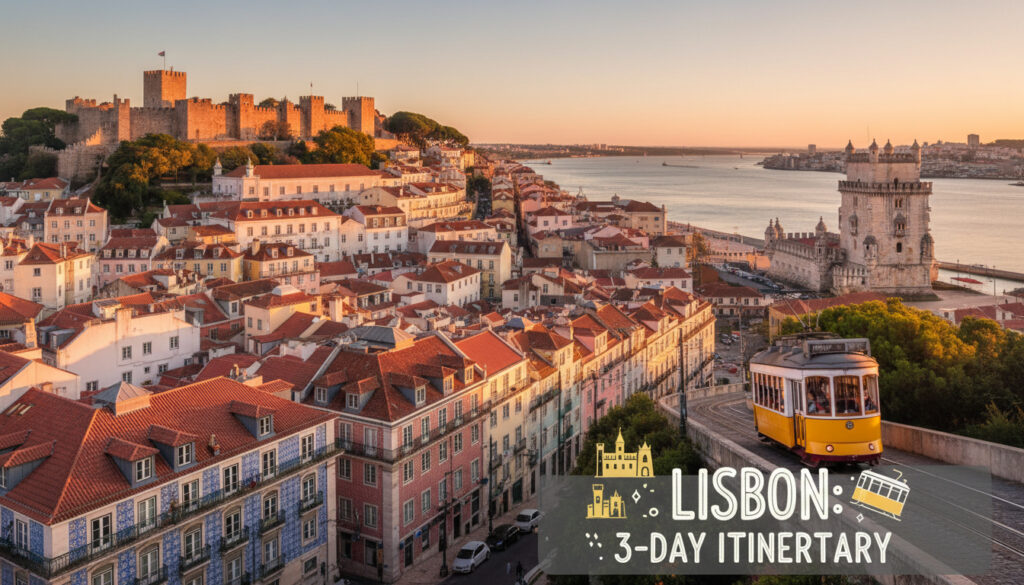
Things to Do in Lisbon – Best Sights and 3-Day Itinerary
Lisbon stretches along the Tagus River in a series of hills, offering a compact urban landscape where 11th-century Moorish fortifications stand near UNESCO World Heritage monasteries. The Portuguese capital blends historic districts such as Alfama and Baixa with contemporary cultural sites like the Museum of Art, Architecture and Technology (MAAT), creating a destination where maritime history and modern design intersect within walkable neighborhoods.
Travelers navigate the city through vintage Tram 28 routes or along bike paths on the Belém waterfront, connecting plazas like Praça do Comércio to elevated miradouros that overlook terracotta rooftops. Official tourism resources highlight the concentration of monuments commemorating the Age of Discovery, while local markets and coffee cultures provide daily entry points into contemporary Lisbon life.
Comprehensive exploration typically requires three to four days, allowing sufficient time for both the historic center and riverside Belém district without rushing through the monastery complexes and castle fortifications that define the skyline.
What Are the Best Things to Do in Lisbon?
Castelo de São Jorge, Jerónimos Monastery, and Belém Tower represent the core historic landmarks, offering panoramic views and Manueline architectural details.
Time Out Market provides centralized tasting options, while Copenhagen Coffee Lab and seafood establishments like A Cevicheria serve specific local and international cuisines.
Alfama, Baixa, Bairro Alto, and Belém each distinctively layer Moorish, neoclassical, and maritime urban planning styles.
Riding Tram 28, biking the Belém promenade, and accessing rooftop miradouros for sunset viewing offer singular perspectives on the cityscape.
- Castelo de São Jorge sits atop Lisbon’s highest point, providing 360-degree panoramic views across the Tagus River and terracotta rooftops.
- Jerónimos Monastery, a UNESCO site commemorating Vasco da Gama’s voyage to India, exemplifies Manueline architecture with maritime motifs.
- Belém Tower features a rhinoceros carving beneath a watchtower, memorializing the first such animal seen in Europe since Roman times, received in 1515 as a diplomatic gift.
- The Church of Jerónimos Monastery offers free entry, with complimentary admission extended to the entire complex on the first Sunday of each month.
- The National Pantheon houses tombs of significant Portuguese figures including explorer Vasco da Gama, footballer Eusébio, and Fado singer Amália Rodrigues.
- Alfama District contains the fortress-like Lisbon Cathedral (Sé de Lisboa) and the art-filled São Vicente de Fora church.
- Miradouro das Portas do Sol provides views toward the Tagus River and Igreja de São Vicente de Fora from a terrace with bar service.
| Attribute | Detail |
|---|---|
| Defining Castle | São Jorge (11th-century Moorish origin) |
| UNESCO Sites | Jerónimos Monastery, Belém Tower |
| Architectural Style | Manueline (Portuguese Late Gothic) |
| Primary Transit | Tram 28 (vintage route) |
| Central Square | Praça do Comércio (Baixa district) |
| Notable Museum | Gulbenkian Museum |
| Contemporary Culture | MAAT (Museum of Art, Architecture and Technology) |
| Historic Market | Feira da Ladra (flea market) |
| Historic Church Detail | Rhinoceros carving at Belém Tower (1515) |
| National Memorial | Panteão Nacional (National Pantheon) |
| Coffee Institution | Copenhagen Coffee Lab & Bakery |
| Gateway Structure | Arco da Rua Augusta |
How Many Days Do You Need in Lisbon and What’s a Sample Itinerary?
Most travelers find that three days provides adequate time to cover Lisbon’s essential districts without exhausting the city’s vertical terrain. A fourth day allows for excursion to nearby destinations such as Sintra or deeper exploration of the alfresco dining and nightlife in districts like Bairro Alto and Chiado.
Three-Day Foundation
A focused three-day structure begins in Baixa at Praça do Comércio, progressing through the Arco da Rua Augusta into the grid-patterned neoclassical streets. The first afternoon should allocate three to four hours for Alfama, including the Lisbon Cathedral and the climb to São Jorge Castle for late-afternoon light over the river. Itinerary specialists recommend converting the second day entirely to Belém, sequencing the Tower and Monastery in the morning before the crowds concentrate.
Day Three and Beyond
The third day typically focuses on the National Pantheon and the tile heritage visible throughout the city, potentially incorporating LX Factory for contemporary retail and dining. Those extending to four days can dedicate the additional time to Sintra’s palaces or specialized museums such as the Casa-Museu Medeiros e Almeida. Extended itinerary guides suggest this pacing for comprehensive coverage.
Skip-the-line tickets for Castelo de São Jorge include an audio guide and eliminate waiting at the highest-traffic historic site. For Jerónimos Monastery, advance purchase is essential for cloister access, though the church itself requires no ticket. Entry is free on the first Sunday of each month, though crowds increase significantly.
What Food Should You Try in Lisbon?
Markets and Casual Dining
The Time Out Market functions as a centralized venue for sampling multiple Portuguese culinary traditions under one roof, attracting both tourists and residents for lunch and early dinner. This Mercado da Ribeira location emphasizes accessibility for visitors seeking condensed food culture exposure. Travel logistics guides frequently cite this as an efficient starting point for culinary exploration.
Seafood and Evening Dining
Traditional Portuguese meals emphasize Atlantic seafood, available at establishments ranging from casual tascas to structured dinner venues. A Cevicheria receives specific mention for evening meals, offering a specialized menu distinct from traditional cod-based preparations. Sipping coffee while people-watching at Praça do Comércio represents a recommended break activity for those integrating dining with sightseeing.
Coffee Culture
Copenhagen Coffee Lab & Bakery operates as a local favorite for morning coffee, serving as a base before ascending to nearby elevated districts or castle approaches. Neighborhood guides position this within the broader Chiado and Bairro Alto exploration routes.
Family-Friendly and Free Things to Do in Lisbon
Specific family programming and comprehensive free attraction listings remain unclear. While certain historic sites offer complimentary entry periods, dedicated children’s activities and structured family itineraries require confirmation from official municipal resources.
The church section of Jerónimos Monastery permits free entry without tickets, though the cloister and archaeological museum require paid admission. Additionally, the entire monastery complex offers free entry on the first Sunday of each month. The exterior grounds of Belém Tower and surrounding gardens provide no-cost access for viewing the 16th-century fortress architecture.
Verified information remains limited regarding dedicated family and children’s activities, comprehensive safety guidance, and structured romantic experience packages. Visitors should consult specialized travel resources and official tourism boards for updated information on kid-friendly programming, seasonal safety advisories, and couple-oriented itineraries.
What Should You Do Each Day in Lisbon?
- Begin at Praça do Comércio in Baixa, passing through the Arco da Rua Augusta to orient within the neoclassical grid.
- Ascend into Alfama District to visit the fortress-like Sé de Lisboa cathedral and São Vicente de Fora church before reaching Castelo de São Jorge.
- Descend to Time Out Market for dinner, sampling multiple Portuguese specialties in the Mercado da Ribeira hall.
- Travel to Belém to visit Belém Tower, observing the 1515 rhinoceros carving and maritime stonework.
- Enter Jerónimos Monastery (church free, cloister ticketed) to view the Vasco da Gama commemorative architecture.
- Explore LX Factory for contemporary retail and tile heritage viewing, followed by dinner at A Cevicheria.
- Visit the National Pantheon to view tombs of Vasco da Gama, Eusébio, and Amália Rodrigues, climbing the internal dome perimeter.
- Bike the Belém promenade or visit the Gulbenkian Museum and MAAT for art and architecture collections.
- Conclude at Miradouro das Portas do Sol for sunset views over the Tagus River with beverages at the terrace bar. Three-day itinerary sources confirm this sequencing.
- Dedicate the day to Sintra for palatial architecture and gardens, extending the itinerary beyond city limits.
Is Lisbon Safe for Tourists?
- Lisbon operates as a major European capital with standard urban infrastructure.
- Pickpocketing risks typically concentrate in high-tourism areas such as Tram 28 and crowded viewpoints.
- Walking distances between major attractions remains feasible though hilly, requiring appropriate footwear.
- Specific crime statistics and neighborhood safety ratings for 2025 remain undocumented.
- Detailed scam typologies targeting tourists and current police response protocols are not publicly documented.
- Comprehensive travel advisory statuses from international governments are not specified.
- Accessibility accommodations for disabled travelers at historic sites require direct venue inquiry.
What Historical Context Defines Lisbon’s Landmarks?
The city’s visible heritage originates from the 11th-century Moorish fortification at São Jorge Castle, which dominated the strategic hilltop before Portuguese unification. Following the Reconquista, medieval rebuilding created the labyrinthine Alfama district, while the 16th-century Age of Discovery generated the Manueline architectural style visible in both Jerónimos Monastery and Belém Tower. These structures incorporate maritime motifs including ropes, spheres, and exotic elements such as the famous rhinoceros carving, celebrating Vasco da Gama’s commercial route to India.
Baixa represents an 18th-century neoclassical reconstruction following the devastating earthquake, creating the grid system anchored by Praça do Comércio. Contemporary developments such as the LX Factory conversion demonstrate industrial adaptation, while the National Pantheon’s domed structure memorializes national figures from exploration, athletics, and music. Those researching urban living comparisons in other global cities might reference the No Frills Niagara Falls – Location Hours Flyer Guide for North American travel logistics.
What Do Expert Sources Say About Lisbon’s Top Attractions?
Castelo de São Jorge sits atop the highest point in Lisbon and offers 360-degree panoramic views over the city’s terracotta rooftops and the Tagus River.
— Anywhere We Roam
Jerónimos Monastery is one of Lisbon’s most impressive UNESCO World Heritage Sites, built to commemorate Vasco da Gama’s voyage to India.
— Into The Bloom
A notable detail is a rhinoceros carved beneath one of the watchtowers, commemorating the first rhinoceros seen in Europe since the Roman era, which arrived in Lisbon in 1515 as a diplomatic gift.
— Art Distance
Is Lisbon Worth Visiting?
Lisbon delivers concentrated historical density through UNESCO-recognized Manueline architecture, Moorish fortifications, and maritime monuments within a geographically compact area. The city accommodates three- to four-day itineraries covering Belém’s exploratory landmarks, Alfama’s medieval alleyways, and Baixa’s neoclassical planning, supplemented by contemporary cultural sites and established coffee and seafood dining. For travelers prioritizing walkable European capitals with significant Age of Discovery heritage, Lisbon presents a documented, content-rich destination. Those evaluating extended urban stays may cross-reference with the Logement a Louer Montreal – 2025 Rents and Neighborhood Guide for comparative cost analysis.
Frequently Asked Questions
What is the best time of year to visit Lisbon?
Specific seasonal weather patterns, peak tourism dates, and optimal booking windows for Lisbon remain undocumented. Travelers should consult meteorological services and official tourism boards for climate data.
What are romantic things to do in Lisbon?
Detailed romantic itineraries, couple-specific activities, and honeymoon packages for Lisbon remain undocumented. General recommendations include sunset viewing at miradouros and riverside dining.
What are the best things to do in Lisbon with kids?
Structured children’s programming, kid-specific museum tours, and family-oriented activity centers remain undocumented. The city’s castle and vintage tram may appeal to younger visitors.
What day trips are available from Lisbon?
Sintra represents the primary documented day trip destination, suitable for inclusion in four-day itineraries. Specific transportation schedules, additional excursion sites, and guided tour options require confirmation.
What is Pink Street?
Pink Street (Rua Nova do Carvalho) is a notably painted thoroughfare in the Cais do Sodré area near Bairro Alto and Chiado, functioning as a nightlife destination within the historic center.
What is the Elevador de Santa Justa?
The Elevador de Santa Justa is a historic lift structure connecting lower Baixa streets to the higher Largo do Carmo, designed by Raoul Mesnier du Ponsard in a neo-Gothic iron style.
Where is Feira da Ladra?
Feira da Ladra is a historic flea market operating in Lisbon, though specific current locations, operating hours, and vendor specialties remain undocumented.
More related posts
 Average Height for Women in Canada: Stats & Global Comparison
 Eugenia Cooney in 2026: Where Is She Now
 Bobbi Althoff: Drake Fallout, Divorce, and Custody Facts
 Do the Oilers Play Tonight? Next Game Schedule, TV & Time
 Door Knobs: Types, Fit, Safety & Buying Guide (Ireland)
 Free Things to Do in Toronto: 23 Cool Spots in 2026
 100 Grams to Oz – Accurate Conversion Guide
 Shaun White: Net Worth, Heart Condition, and Dobrev Split