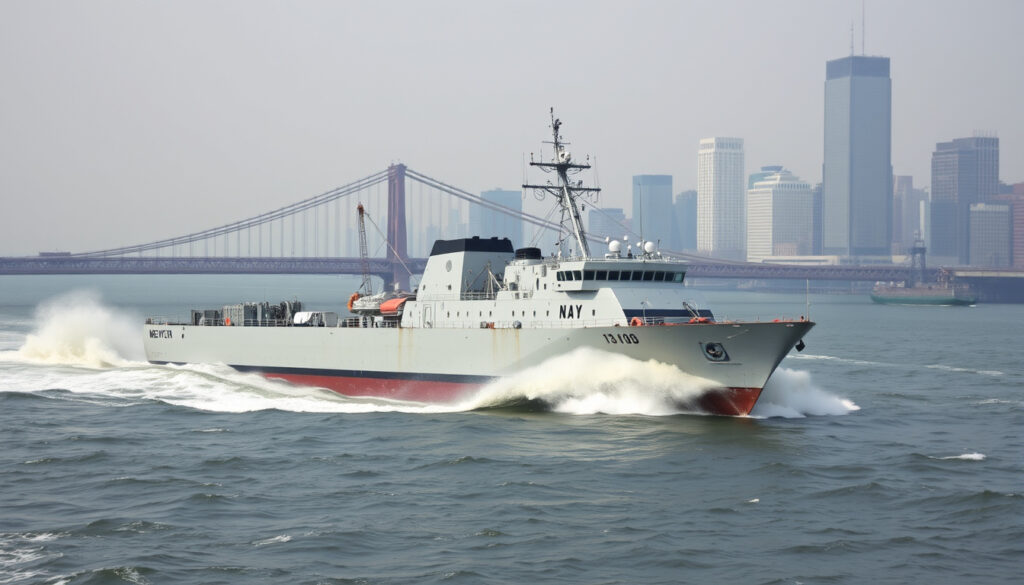
Mexican Navy Ship Brooklyn Bridge Crash: What Happened
Most ship accidents follow a predictable logic—mechanical failure, human error, bad weather. The collision of the Mexican Navy training ship Cuauhtémoc into the Brooklyn Bridge on May 17, 2025, is harder to explain than that. The ship was 147 feet tall. The Brooklyn Bridge clears just 127 feet above the East River. And yet 277 people aboard watched as the vessel drifted astern, masts first, into one of the world’s most recognizable spans. Two cadets died in the upper rigging. This is how it happened, and why it still matters.
Date: May 17, 2025 ·
Ship: ARM Cuauhtémoc ·
Deaths: 2 ·
Injured: 20 ·
Cause: Power loss
Quick snapshot
- Collision at 8:26 p.m. EDT, ship drifted astern instead of forward (Wikipedia)
- Two cadets killed, 20 injured aboard the Cuauhtémoc (USNI News)
- Three topgallant masts struck bridge underside, collapsed on crew in rigging (YouTube NTSB Analysis)
- NTSB preliminary report released June 30, 2025 (Wikipedia)
- Exact cause of auxiliary diesel engine failure (initial reports cited 1125hp auxiliary failure) (Secret Projects Forum)
- Full chain of command responsibility in language translation during docking maneuver (Wikipedia)
- April 4, 2025: Cuauhtémoc departs Acapulco for 254-day training cruise (LA Times)
- May 13, 2025: Ship arrives NYC, docks at South Street Seaport Pier 17 (YouTube NTSB Analysis)
- June 6, 2025: Ship towed to Brooklyn Navy Yard after weeks adrift (Secret Projects Forum)
- Mexican Navy internal inquiry ongoing, coordinated with US authorities (Wikipedia)
- NTSB final report pending; Mexican Navy may face international maritime liability questions (NTSB)
These measurements explain why the Cuauhtémoc physically could not pass under the Brooklyn Bridge—and why structural damage to the bridge was never in question.
| Detail | Value |
|---|---|
| Ship Name | ARM Cuauhtémoc (BE-01) |
| Date | May 17, 2025 |
| Location | Brooklyn Bridge, NYC |
| Fatalities | 2 cadets |
| Injured | 20 crew members |
| Post-Crash | Towed to Brooklyn Navy Yard June 6, 2025 |
| Ship Height | 147 feet (45 m) |
| Bridge Clearance | 127 feet (39 m) |
Why did a Mexican Navy ship hit the Brooklyn Bridge?
The Cuauhtémoc collided with the Brooklyn Bridge because the ship moved astern instead of forward toward the open sea, striking the bridge due to its masts exceeding the 39-meter clearance. According to the NTSB preliminary report released June 30, 2025, the docking pilot issued astern commands that were acknowledged by the captain, translated into Spanish, and relayed to a crewmember on the deck below—but something in that chain went wrong.
Power loss details
Initial reports cited auxiliary diesel engine failure (1125hp), leaving the ship powerless and pulled by the East River current under the bridge. The vessel was traveling at 5.9 knots astern when it contacted the bridge, continued under the span, hit the seawall, came to rest at 20:27, and drifted away from the scene by 20:28 per AIS data.
Power loss alone does not explain the direction. A dead ship drifts with current. The Cuauhtémoc went backward into the bridge because someone ordered it astern—or failed to correct the course before the command was executed. That command, and who gave it, is the central question the investigation has not yet closed.
Pilot information
NYPD Special Operations Chief Wilson Aramboles confirmed that Cuauhtémoc was intended to head out to sea but ended up traveling in the wrong direction. Maritime historian Sal Mercogliano, who analyzed NTSB footage, stated plainly: “Everybody involved here knows this ship cannot go under the Brooklyn Bridge.” The docking pilot, reportedly from the New York area, was aboard to guide the vessel out of South Street Seaport Pier 17.
Sal Mercogliano, Maritime Historian
The docking pilot gave astern commands to the captain on the conning deck, which were acknowledged by the captain, translated to Spanish, and relayed to another crewmember on the deck below.
Why was there a Mexican Navy ship in NYC?
The Cuauhtémoc was on a 254-day training cruise, the Mexican Navy’s annual program for naval academy cadets at the end of their classes. The ship departed Acapulco on April 4, 2025, carrying 227 to 277 people aboard and planning 22 port calls across 15 countries. New York City was a scheduled stop—docked at South Street Seaport for a four-day visit beginning May 13, 2025—before continuing to Iceland.
Training ship visit
As a three-masted barque and flagship of the Mexican Navy, the Cuauhtémoc serves as a floating classroom for future officers. The ship, built in 1982, measures 297 feet in length and 40 feet in beam with a displacement of roughly 1,700 tons. Its visits to foreign ports are diplomatic as much as educational—welcoming ceremonies, public tours, and ceremonial events are built into each stop.
Departure from port
The Cuauhtémoc’s departure from Pier 17 on the evening of May 17 was meant to be routine. Mayor Eric Adams stated afterward that the bridge was spared major structural damage, announcing the two deaths early the following morning. Eyewitness videos show the masts snapping one by one as the ship drifted; a tugboat was nearby but could not prevent the contact. No injuries occurred on the bridge itself—pedestrians and vehicle traffic scrambled away from above.
LA Times
Eyewitness videos show masts snapping one by one; tugboat nearby. No injuries on bridge; onlookers scrambled away.
The Cuauhtémoc was originally intended to participate in events planned for America’s 250th anniversary on July 4, 2026. That participation is now in question following the collision.
What this means: the diplomatic and ceremonial value of the training cruise—its central purpose—has been undermined by a single communication failure that took two young lives.
Why were the Mexican sailors standing on the masts?
Sailors aboard the Cuauhtémoc were “manning the yards”—an old naval tradition in which crew members climb the rigging and stand on the horizontal yards during ship arrivals and departures. The practice is ceremonial but also practical for a tall ship: it allows crew to observe the vessel’s movement and respond to conditions aloft.
Manning the yards tradition
The tradition traces back centuries to square-rigged sailing vessels, where standing on the yards allowed sailors to manage sails in open ocean. On modern training ships like the Cuauhtémoc, “manning the yards” during port departures serves as a rite of passage for cadets and a visible symbol of naval heritage during public displays.
Position during crash
When the ship drifted astern under the Brooklyn Bridge, the topgallant masts—the uppermost sections of the three spars—made contact with the bridge’s underside. Two cadets in the upper rigging were struck when the masts collapsed. Their harnesses reportedly unhooked as they were tied to ropes above, a detail confirmed in NTSB video analysis. Twenty other crew members sustained injuries ranging from minor to critical.
NTSB Analysis (maritime safety channel)
Two crew fatalities occurred when masts collapsed on cadets in upper rigging; their harnesses unhooked as they were tied to ropes above.
The implication: a ceremonial tradition designed to honor the ship placed the most junior crew members directly in the path of a structural failure that should never have occurred.
Could a Mexican ship fit under Brooklyn Bridge?
No. The Cuauhtémoc’s mast height of 147 feet (45 meters) far exceeded the Brooklyn Bridge’s vertical clearance of 127 feet (39 meters). This was not a close call or a miscalculation under pressure—it was a geometric impossibility for a vessel of that size to pass underneath.
Mast height vs bridge clearance
The Brooklyn Bridge’s 127-foot clearance is fixed. The Cuauhtémoc’s tallest point, at the topgallant sails, stood 20 feet above that limit. Maritime historian Sal Mercogliano’s analysis confirms that no one aboard the vessel, or advising it, expected the ship to go under the bridge.
Collision mechanics
The kinetic energy of the moving vessel, traveling at 5.9 knots in reverse, was sufficient to down all three topmasts and their rigging when they contacted the bridge structure. The bridge itself sustained no major damage. Brooklyn Bridge lanes were closed briefly after the collision and reopened by 10:30 p.m. that evening.
The question is not whether the ship could fit—it clearly could not. The question is why it moved in the direction that made the collision inevitable. That answer lies in the command chain and communication protocols aboard, not in the ship’s dimensions. No amount of preparation aloft could have prevented what the wrong heading caused.
The pattern: the ship was always going to hit the bridge if it went backward. Every person responsible for the vessel’s heading knew the masts would not clear.
What caused the Mexican ship to run into the Brooklyn Bridge?
The ship ran into the Brooklyn Bridge because it was moving astern when it should have been moving forward. After losing auxiliary power, the vessel was pulled by tidal current—but the critical factor was the astern command that sent the Cuauhtémoc backward toward the bridge instead of forward toward the East River exit.
Sequence of events
The sequence reconstructed from NTSB data and AIS tracking shows: power loss at the dock, a docking pilot’s astern command, translation and relay of that command to crew, the vessel’s movement in reverse toward the bridge, mast contact with the underside, structural collapse of rigging onto crew, the ship continuing under the bridge, contact with the seawall, and eventual drift away from the scene.
Official reports
Mayor Eric Adams confirmed the collision on May 17 and announced the casualties the following morning. The Mexican Secretariat of the Navy issued a statement confirming the incident and promising transparency. An NTSB preliminary report released June 30, 2025, documented the communication chain and confirmed astern movement. Mexican Navy internal inquiry is ongoing, coordinated with U.S. authorities.
Upsides
- Bridge sustained no major structural damage
- No injuries to pedestrians or vehicles on bridge
- NYPD and FDNY response rapid; lanes reopened within two hours
- NTSB preliminary report provided detailed timeline within six weeks
Downsides
- Two cadets killed in upper rigging during ceremonial maneuver
- 20 crew members injured, including three in critical condition initially
- Three masts and rigging collapsed; ship required weeks-long tow
- Training cruise interrupted; next port visit uncertain
The catch: the balance sheet is not close. Two deaths, twenty injuries, and a training cruise derailed against a bridge that reopened the same evening.
Timeline
Four dates define the Cuauhtémoc collision and its aftermath.
The collision unfolded across three pivotal weeks in May and May 2025, with the incident itself triggering a parallel investigation that has not yet concluded.
| Date | Event |
|---|---|
| April 4, 2025 | Cuauhtémoc departs Acapulco for 254-day training cruise |
| May 13, 2025 | Ship arrives New York City, docks at South Street Seaport |
| May 17, 2025 | Collision with Brooklyn Bridge at 8:26 p.m. EDT; two fatalities, 20 injured |
| June 30, 2025 | NTSB preliminary report released |
What’s confirmed and what’s still unclear
The confirmed facts are these: power loss led to drift, the vessel moved astern instead of toward open water, three masts struck the bridge underside, two cadets died in the rigging collapse, and the NTSB documented the communication chain involving translated commands. What remains unclear is the exact technical cause of auxiliary engine failure and the precise allocation of responsibility across the command hierarchy during the maneuver.
- Confirmed: 2 dead, 20 injured
- Confirmed: Power loss led to drift
- Confirmed: Masts collided with bridge underside
- Unclear: Exact power failure cause
- Unclear: Pilot responsibility details
Related reading: Mexican torta
An in-depth timeline casualties investigation confirms the Cuauhtémoc struck during departure from South Street Seaport, killing two and injuring twenty amid power failure.
Frequently asked questions
What is the name of the Mexican Navy ship?
The ship is the ARM Cuauhtémoc (BE-01), a three-masted barque and flagship of the Mexican Navy. Built in 1982, it serves as a training vessel for naval academy cadets.
How many people died in the crash?
Two crew members died in the collision. Both were cadets assigned to the upper rigging during the manning-the-yards tradition as the ship departed South Street Seaport.
When was the ship towed away?
The Cuauhtémoc was towed to the Brooklyn Navy Yard on June 6, 2025, nearly three weeks after the collision. The vessel had remained in the East River area in the interim.
What tradition were the sailors performing?
The sailors were “manning the yards,” a naval tradition in which crew climb the rigging and stand on the horizontal yards during ceremonial arrivals and departures. The practice is centuries old and common on tall ships.
Is there video of the Brooklyn Bridge ship crash?
Yes. Eyewitness videos recorded the collision and show the masts snapping as the ship contacted the bridge. The NTSB also released video analysis of the event.
What happened to the ship after the collision?
After colliding with the bridge, the Cuauhtémoc continued under the span, struck the seawall, came to rest, and drifted away. The vessel was later towed to the Brooklyn Navy Yard for assessment and repairs.
Why did the Mexican Navy ship have cadets on the masts?
Cadets were assigned to the rigging as part of the standard training cruise and the ceremonial manning-of-the-yards tradition practiced during port departures. Both cadets who died were in the upper rigging when the masts collapsed.
More related posts
 Dave Mustaine: Cancer, Sobriety, Metallica to Megadeth
 Jerry Lee Lewis: Life, Music, and Scandal
 TD Bank Branch Closures – Full List and Timeline
 Anupam Kher: Age, Hair Loss, Wife’s Illness, and Career
 Aaron Ekblad: Suspension, Contract, and Personal Life
 Jesse Williams: Actor, Activist, and Grey’s Anatomy Star
 Bob Marley: Death, Children, Assassination, and Final Words
 Sean Parker: Napster Co-Founder, Facebook President, Billionaire Philanthropist