English Royal Family: Current Monarch, History, and Key Facts
Most people can name the current king, but fewer could explain exactly how the British monarchy actually works day‑to‑day. The English royal family is a living institution that blends centuries of tradition with a modern constitutional role.
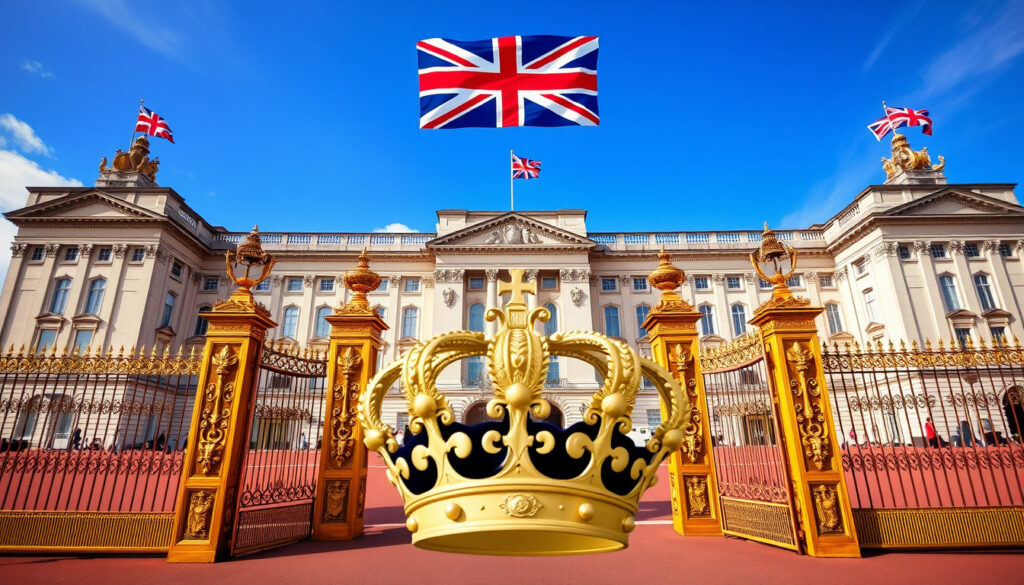
Current monarch: King Charles III (since 8 September 2022) · Total British monarchs: 63 (since 9th century) · Official residence: Buckingham Palace, London · Royal family surname: Windsor (since 1917) · Head of state role: Constitutional monarch, non‑political
Quick snapshot
- King Charles III is the current monarch since 8 September 2022 (The Royal Family official website)
- Prince William is first in line to the throne (The Royal Family official website)
- Exact net worth of King Charles III varies by source (BBC News editorial)
- Meghan Markle’s future role in royal events is not publicly defined (ABC News editorial)
- 8 September 2022: King Charles III ascends the throne (The Royal Family official website)
- Heir apparent William becomes Duke of Cornwall and Duke of Rothesay automatically (YouTube educational)
- Succession will follow the fixed order: William → George → Charlotte (The Royal Family official website)
- Parliamentary debates about modernisation (e.g., gender‑neutral succession already enacted) may continue (Wikipedia encyclopaedic)
Six key facts about the current royal family, pulled from official records and verified data:
| Label | Value |
|---|---|
| Monarch | King Charles III |
| Queen Consort | Queen Camilla |
| Heir Apparent | Prince William, Prince of Wales |
| Royal House | Windsor |
| Number of monarchs since 1066 | 41 |
| Official website | royal.uk |
Who is the current royalty in England?
King Charles III and the immediate royal family
- Charles became king automatically upon the death of his mother, Queen Elizabeth II, on 8 September 2022 (The Royal Family official website).
- At 73, he was the oldest person ever to accede to the British throne (BBC News editorial).
- Camilla became queen consort at the same time, fulfilling a request made by Elizabeth II (ABC News editorial).
The immediate family also includes the monarch’s children and their spouses, though official membership is governed by tradition rather than a written rule.
Line of succession: Prince William and beyond
- The first three people in line are William, Prince of Wales; Prince George of Wales; and Princess Charlotte of Wales (The Royal Family official website).
- Prince Harry now ranks below all three of his brother’s children (BBC News editorial).
The pattern: succession is set by law, not royal preference — the monarchy today is a fixed constitutional structure.
Charles took the throne later in life than any predecessor, which means the transition to William could come sooner than in previous generations — a fact that shapes both palace planning and public expectation.
Who is the most famous English royal?
Queen Elizabeth II as the longest-reigning monarch
- Elizabeth II reigned for 70 years, from 1952 until her death in 2022 (Historic UK historical resource).
- She remains the most recognised British monarch globally, having appeared on currency and stamps across the Commonwealth.
Historical figures: Henry VIII, Elizabeth I, Victoria
- Henry VIII (reigned 1509–1547) is known for six marriages and triggering the English Reformation (Historic UK historical resource).
- Elizabeth I ruled during the Elizabethan era (1558–1603), a golden age of exploration and culture.
- Queen Victoria (1837–1901) gave her name to the Victorian era and oversaw vast imperial expansion.
The implication: fame among royals is often tied to reign length, cultural impact, or scandal — but Elizabeth II’s sheer duration makes her the anchor of modern memory.
Who is richer, Charles or William?
Two estimates from the Sunday Times Rich List 2023 provide a clear picture of the financial gap between the monarch and his heir.
| Royal | Estimated net worth (Sunday Times 2023) | Primary source of wealth |
|---|---|---|
| King Charles III | £1.8 billion | Duchy of Lancaster, private investments, inherited assets |
| Prince William | £1 billion | Duchy of Cornwall (inherited on Charles’s accession) |
The pattern: the Duchy of Cornwall — a private estate that funds the heir apparent — transferred to William upon Charles’s accession, instantly making him one of the richest people in Britain. The monarch’s wealth is larger but more opaque, as it mixes private holdings with the Sovereign Grant.
Both men’s wealth is substantial, but the heir’s fortune is more transparent because the Duchy of Cornwall publishes annual accounts. The King’s private wealth, held via the Duchy of Lancaster, offers less visibility — a point that fuels ongoing debate about royal financial accountability.
Is Meghan Markle still a royal?
Meghan Markle’s current status after stepping back
- Meghan Markle retains the title Duchess of Sussex (ABC News editorial).
- She and Prince Harry stepped back from royal duties in 2020.
- They are no longer working members of the royal family.
The implication: the titles remain, but the active role is suspended — a distinction that often confuses public perception.
What is the English royal family name?
The House of Windsor
- The current royal family name is Windsor, adopted in 1917 during World War I to replace the German‑sounding Saxe‑Coburg and Gotha (The Royal Family official website).
- Members who need a surname use Mountbatten‑Windsor (since 1960).
Historical royal houses: Tudor, Stuart, Hanover
- Tudor (1485–1603): started by Henry VII, ended with Elizabeth I.
- Stuart (1603–1714): included the union of the crowns and the Civil War.
- Hanover (1714–1901): brought George I and later Queen Victoria.
The catch: the Windsor name is relatively modern, but the institution’s lineage stretches back over a thousand years. For most purposes, “Windsor” and “royal family” are synonymous today.
Who controls the royal family?
The monarch’s constitutional role
- Charles is head of state but does not govern. He reigns, but does not rule (Wikipedia encyclopaedic).
- The monarch’s formal powers — to appoint a prime minister, give royal assent to laws — are exercised on the advice of elected ministers.
Parliament and the government’s authority
- Legislative power rests with Parliament. The monarch cannot veto legislation, though they are consulted and must give formal assent.
- The royal family is funded through the Sovereign Grant (a percentage of Crown Estate profits) and private income from the Duchies (The Royal Family official website).
The pattern: the monarchy’s influence today is symbolic and advisory, not executive. Parliament and the government are the real decision-makers, making the royal family a ceremonial institution without political power.
Timeline of the English monarchy
- 1066 – Norman Conquest; William the Conqueror becomes king
- 1485–1603 – Tudor dynasty (Henry VII, Henry VIII, Elizabeth I)
- 1837–1901 – Victorian era; Queen Victoria reigns
- 1917 – House of Windsor name adopted
- 1952–2022 – Reign of Queen Elizabeth II
- 8 September 2022 – King Charles III ascends the throne (Historic UK historical resource)
What’s confirmed, what’s still unclear
Confirmed facts
- King Charles III is the current monarch.
- Queen Elizabeth II reigned from 1952 to 2022.
- The royal family surname is Windsor.
- Prince William is first in line to the throne.
What’s unclear
- Exact net worth of King Charles III varies by source — Sunday Times estimates £1.8 billion, other reports differ.
- Meghan Markle’s exact future role in royal events is not publicly defined after stepping back in 2020.
- King Charles’ favourite food is not officially confirmed; reports vary.
Expert perspectives
“The royal family’s role is to support the monarch in fulfilling their duties as head of state, both at home and across the Commonwealth.”
— The Royal Family official website
“Charles III is the oldest person to have succeeded to the British throne, at 73 years old.”
— BBC News editorial
“The Sunday Times Rich List 2023 estimated King Charles III’s personal wealth at £1.8 billion, while Prince William’s was estimated at £1 billion.”
— Sunday Times Rich List 2023 financial analysis
The pattern across these sources: official sites provide constitutional facts, editorial outlets supply context, and financial rankings give a snapshot of personal wealth. Together they build a reliable picture of the institution.
For the British public and international observers alike, the monarchy’s future hinges on one question: will it remain a unifying symbol as the country changes? The institution must adapt to modern expectations of transparency and accountability to sustain the public trust that has carried it for centuries.
reddit.com, youtube.com, infoplease.com, en.wikipedia.org, youtube.com, youtube.com
For a deeper look at the history of the royal familys name, this guide traces the lineage and houses that have shaped the monarchy.
Frequently asked questions
What is the role of the British monarch?
The monarch is the head of state, but their role is ceremonial and symbolic. They have no real political power and must remain politically neutral. Official duties include appointing the prime minister, giving royal assent to laws, and representing the nation at state events.
How is the royal family funded?
The royal family receives public money through the Sovereign Grant, which is a percentage of the profits from the Crown Estate. They also have private income from the Duchy of Lancaster (the monarch) and the Duchy of Cornwall (the heir apparent).
What is the line of succession to the British throne?
The line of succession is determined by statute and follows absolute primogeniture (no preference for male heirs). The current order is King Charles III, then Prince William, Prince George, Princess Charlotte, Prince Louis, and so on.
Does the royal family have any political power?
No. The monarch is head of state but has no legislative or executive power. All political decisions are made by Parliament and the elected government. The monarch’s formal powers (e.g., royal assent) are exercised only on ministerial advice.
What is the difference between the royal family and the monarchy?
The monarchy is the institution itself — the system of hereditary rule with a king or queen as head of state. The royal family refers to the individuals who are members of that institution, including the monarch, their spouse, children, and grandchildren.
How many members of the royal family are there?
There is no official count. The core working members include the monarch, his consort, the Prince and Princess of Wales and their children, and a handful of others (e.g., the Duke of York). The broader family includes dozens of descendants.
What is the Sovereign Grant?
The Sovereign Grant is the annual payment from the government to the monarch to cover official expenses (staff, travel, maintenance of palaces). For 2023–2024 it was set at 12% of the Crown Estate’s net profits, amounting to about £86 million.
Can the royal family be removed from power?
The monarchy can be abolished only by an act of Parliament, which would require a majority vote. This is theoretically possible but politically unlikely, as the institution retains broad public support in the UK.
More related posts
 Canadiens c. Golden Knights: H2H, Scores & Preview
 June Carter Cash: Biography, Sobriety Role, Death & Legacy
 Go Rendez-Vous – Private Booking Platform Explained
 Jon Voight: Biography, Family Estrangement, and Political Views
 Guerrero Jr: $500M Deal, Family, Stats & Nickname Explained
 What Is Standard Deviation – Complete Beginner’s Guide
 Genie Bouchard: From Tennis Star to Pickleball Pro
 Egg Roll in a Bowl Recipe: A Quick and Healthy Low-Carb Dinner