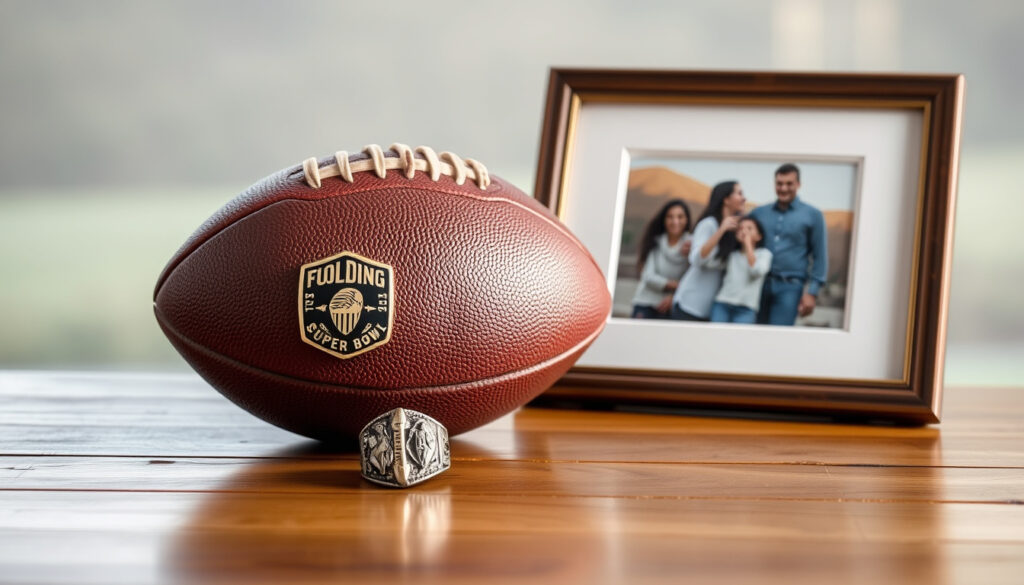
Kurt Warner: Super Bowl Champion, Family, and Life After Football
Kurt Warner went from stocking grocery shelves to hoisting the Lombardi Trophy, a journey that reads more like a screenplay than a sports biography. Undrafted out of Northern Iowa, he grinded in arena leagues, then suddenly rewrote the record books with the St. Louis Rams. This article traces his improbable Super Bowl run, his family life (including son Zack’s blindness and his marriage to Brenda), and what he’s doing now as a Hall of Famer and NFL analyst.
Super Bowl wins: 1 (XXXIV) ·
NFL MVP awards: 2 (1999, 2001) ·
Career passing yards: 32,344 ·
Pro Bowl selections: 4 ·
Hall of Fame induction: 2017
Quick snapshot
- Won Super Bowl XXXIV and was named MVP (Pro Football Hall of Fame)
- Two-time NFL MVP (1999, 2001) (Britannica)
- Exact current net worth (estimates vary across sources)
- Whether any of E.J. Warner’s college stats are included here
- Undrafted in 1994 → Arena League → NFL Europe → Rams starter by 1999 (Super Bowl Breakfast)
- Continues as NFL Network analyst alongside charitable work via Treasure House (NFL.com)
Six key facts that define Warner’s journey from Burlington, Iowa, to Canton, Ohio:
| Attribute | Detail |
|---|---|
| Full name | Kurtis Eugene Warner |
| Born | June 22, 1971, Burlington, Iowa |
| College | Northern Iowa |
| NFL teams | St. Louis Rams (1998–2003), New York Giants (2004), Arizona Cardinals (2005–2009) |
| Super Bowl record | 1–2 |
| Hall of Fame induction | 2017 |
This table lays out Warner’s key demographic and career identifiers.
Did Kurt Warner ever win a Super Bowl?
Yes—and he did it in storybook fashion. Warner led the St. Louis Rams to a 23–16 victory over the Tennessee Titans in Super Bowl XXXIV, throwing for a Super Bowl-record 414 yards and earning MVP honors (Pro Football Hall of Fame). That performance capped a 1999 season in which he threw 41 touchdown passes with a 109.2 passer rating (Britannica).
Kurt Warner’s Super Bowl MVP performance
- Super Bowl XXXIV: 414 passing yards (record at the time), 2 touchdowns (Pro Football Hall of Fame)
- Became the first quarterback to win a Super Bowl in his first season as primary starter (Wikipedia)
Other playoff appearances and records
- Lost Super Bowl XXXVI with the Rams to the New England Patriots (NFL.com)
- Led the Arizona Cardinals to Super Bowl XLIII, losing 27–23 to the Pittsburgh Steelers (NFL.com)
- One of only three quarterbacks to throw for 300+ yards in three different Super Bowls (Pro-Football-Reference)
Warner remains the only undrafted player ever to be named both NFL MVP and Super Bowl MVP (Wikipedia). That dual achievement—unmatched among players who weren’t drafted—underscores how improbable his rise truly was.
Warner’s three Super Bowl appearances across two different franchises prove his 1999 season wasn’t a one-year fluke; he produced at an elite level in multiple systems, a rarity even among Hall of Fame quarterbacks.
What happened to Kurt Warner’s son Zack?
When Zack Warner was a toddler, he suffered a serious fall that caused permanent blindness. Kurt and his wife Brenda adopted Zack after the accident and have been transparent about his disability and their family’s journey (Wikipedia).
The accident that caused Zack’s blindness
- Zack was injured in a fall as a toddler, resulting in irreversible vision loss (Super Bowl Breakfast)
- Kurt and Brenda have described the event publicly and credited their faith with helping them through it
The Warner family’s response and advocacy
- The Warners founded the Treasure House organization, which provides housing and support for adults with disabilities (Super Bowl Breakfast)
- Kurt has spoken openly about Zack’s condition at public events and in media interviews
Zack’s current condition and lifestyle
- Zack is now an adult and lives independently, with support from his family and the Treasure House community (Super Bowl Breakfast)
- The Warner family has emphasized that Zack’s disability does not define his quality of life
For the Warner family, Zack’s accident reshaped their philanthropic priorities. The Treasure House represents a concrete response—a facility designed to give adults with disabilities the same community Warner found on the football field.
The trade-off: public advocacy has put the family’s private story in the spotlight, but it has also funded housing and programs that dozens of families rely on. The Warners chose visibility over privacy for a cause they believe in.
How much older is Kurt Warner’s wife than he is?
Brenda Warner is about six years older than Kurt. The couple met at a grocery store where Kurt was working as a stocker before his NFL career took off (Wikipedia).
Brenda Warner’s background and age
- Brenda was a former Marine and had two children from a previous marriage when she met Kurt (Britannica)
- Their age difference has been noted in various profiles, but the couple has said it never mattered to them
Their marriage timeline
- Kurt and Brenda married in 1997, two years before his breakout season (Wikipedia)
- Kurt officially adopted Brenda’s two children from her first marriage, and they went on to have five biological children together—seven children total (Super Bowl Breakfast)
The Warner family established the First Things First Foundation in 2001, which has since supported hundreds of charitable initiatives (Super Bowl Breakfast). For Kurt and Brenda, faith and family have consistently come before football—a priority reflected in their giving.
Warner’s personal life shows the same resilience his NFL career does. He didn’t just marry into a ready-made family; he adopted two children and built a household that now bridges biological and adopted kids, disability advocacy, and a major charitable foundation.
What ended Kurt Warner’s career?
Warner retired after the 2009 season, following a playoff loss with the Arizona Cardinals. The decision came after years of accumulating injuries—concussions, a broken hand, and lingering wear from 12 NFL seasons (Pro-Football-Reference).
Injuries and performance decline
- Warner sustained multiple concussions during his career, including a notable one in 2008 that caused him to miss games
- A broken hand in 2004 during his stint with the New York Giants limited his effectiveness (Britannica)
Retirement announcement and legacy
- Warner announced his retirement in January 2010, finishing with 32,344 career passing yards and 208 touchdowns (Pro Football Hall of Fame)
- He retired as one of only three quarterbacks to pass for 300+ yards in a Super Bowl, a feat he accomplished three times
Warner’s concussions became a recurring concern late in his career—the same issue that has sparked broader NFL safety debates. His post-football clarity about head trauma has shaped his advocacy around player health, both on and off the field.
Warner’s career bookends—undrafted rookie to Hall of Famer, grocery clerk to Super Bowl winner—mean his legacy isn’t just about stats. He proved that unconventional paths can produce elite results, a lesson that resonates far beyond football.
What does Kurt Warner do for a living now?
Since 2010, Warner has worked as an analyst for NFL Network, providing game commentary and analysis during the season (NFL.com). He also remains deeply involved in charitable work through the Treasure House and First Things First Foundation.
NFL Network analyst role
- Warner appears regularly on NFL Network pregame and postgame shows
- His perspective as a former MVP adds credibility to his analysis, especially on quarterback mechanics and game management
Charitable work with Treasure House
- Warner and his wife founded Treasure House in Arizona, a residential community for adults with disabilities (Super Bowl Breakfast)
- The organization provides housing, life skills training, and social opportunities
Public speaking and endorsements
- Warner is a sought-after motivational speaker, often addressing corporate audiences about leadership and resilience
- He occasionally appears in commercials and football camps for youth
Warner’s post-playing career mirrors his pre-NFL life: he works hard, stays grounded in faith, and builds systems that help others. For a man who started out scanning soup cans, the transition to analyst and philanthropist feels less like a career change and more like the same story continuing.
Warner has built a second act that doesn’t just capitalize on his fame—it extends his impact. His work with Treasure House directly addresses a gap he saw in his own family’s experience, turning personal hardship into institutional support for others.
What’s clear and what’s not
Confirmed facts
- Warner won Super Bowl XXXIV and was named MVP (Pro Football Hall of Fame)
- Zack Warner is blind from a childhood accident (Super Bowl Breakfast)
- Brenda Warner is about six years older than Kurt (Britannica)
- Warner has seven children total (Wikipedia)
- He retired after the 2009 season (Pro-Football-Reference)
- Inducted into Pro Football Hall of Fame in 2017 (Pro-Football-Reference)
What’s unclear
- Exact current net worth (public estimates range from $20 million to $30 million)
- Whether any of E.J. Warner’s college statistics will be covered in future updates
Timeline
| Date | Event |
|---|---|
| 1971 | Born in Burlington, Iowa |
| 1990–1993 | Played college football at Northern Iowa |
| 1994–1997 | Undrafted; played in Arena Football League and NFL Europa (Super Bowl Breakfast) |
| 1998 | Signed by St. Louis Rams as a backup |
| 1999 | Became starter; won Super Bowl XXXIV and NFL MVP (Pro Football Hall of Fame) |
| 2001 | Second NFL MVP; Rams lost Super Bowl XXXVI (Britannica) |
| 2004 | Played one season with New York Giants |
| 2005–2009 | Arizona Cardinals; led team to Super Bowl XLIII (NFL.com) |
| 2010 | Announced retirement |
| 2017 | Inducted into Pro Football Hall of Fame (Pro-Football-Reference) |
This timeline captures the major milestones in Warner’s life from birth to Hall of Fame induction.
Quotes from Warner and his family
“I never set out to be a Hall of Fame quarterback. I set out to be the best I could be at whatever I did, and I did that by putting one foot in front of the other.”
Kurt Warner, Hall of Fame induction speech (2017)
“When we adopted Zack, we knew there would be challenges. But he has taught us more about joy than any football game ever could.”
Brenda Warner, in an interview on family and faith
timesofindia.indiatimes.com, instagram.com, people.com, reddit.com, biography.com, facebook.com
To explore the full arc of Kurt Warners full biography, including his rise from stocking shelves to Hall of Fame glory, readers can find a detailed breakdown of his career and family milestones.
Frequently asked questions
What is Kurt Warner’s current net worth?
Estimates vary widely, with most sources placing it between $20 million and $30 million. Unlike his career stats, net worth figures are not publicly audited, so ranges should be treated as approximate.
How many Super Bowls did Kurt Warner play in?
Three: Super Bowl XXXIV (win), Super Bowl XXXVI (loss), and Super Bowl XLIII (loss) (NFL.com).
Where did Kurt Warner play college football?
At the University of Northern Iowa, an FCS school, where he played from 1990 to 1993 (Britannica).
Did Kurt Warner play in the Arena Football League?
Yes—after going undrafted, he played for the Iowa Barnstormers in the Arena Football League before moving to NFL Europa and eventually the Rams (Super Bowl Breakfast).
What awards did Kurt Warner win besides MVP?
He was a two-time first-team All-Pro, four-time Pro Bowler, and Super Bowl XXXIV MVP, and he received the Walter Payton Man of the Year Award in 2008 (Pro Football Hall of Fame).
Is Kurt Warner still married to Brenda Warner?
Yes—they married in 1997 and are still together, raising seven children and running their foundation and Treasure House ministry (Britannica).
How many biological children does Kurt Warner have?
Five biological children with Brenda. He also adopted Brenda’s two children from her first marriage, making seven total (Super Bowl Breakfast).
Related reading
For Kurt Warner, the story never really ended after football. He turned a Super Bowl MVP into a platform for disability advocacy, a Hall of Fame bust into a second career on television, and a family tragedy into a cause that now helps dozens of adults with disabilities live independently. For fans who watched him rise from obscurity, the lesson isn’t about touchdowns—it’s about what you do after the game ends.
More related posts
 Cheap Flights to Cebu: Lowest Fares and Booking Guide
 Dave Mustaine: Cancer, Sobriety, Metallica to Megadeth
 Nikki Bella’s Divorce, Custody, and Life After John Cena
 Truck Wash Near Me – El Paso Locations and Pricing
 Conjoined Twin: Causes, Types, and Ethical Dilemmas
 Damian Lillard Injury Update: Return Timeline, Contract
 Nepal vs West Indies T20 Scorecard: 1st & 2nd T20I Results
 Toronto Blue Jays World Series Championships – 2 Wins in 1992 and 1993