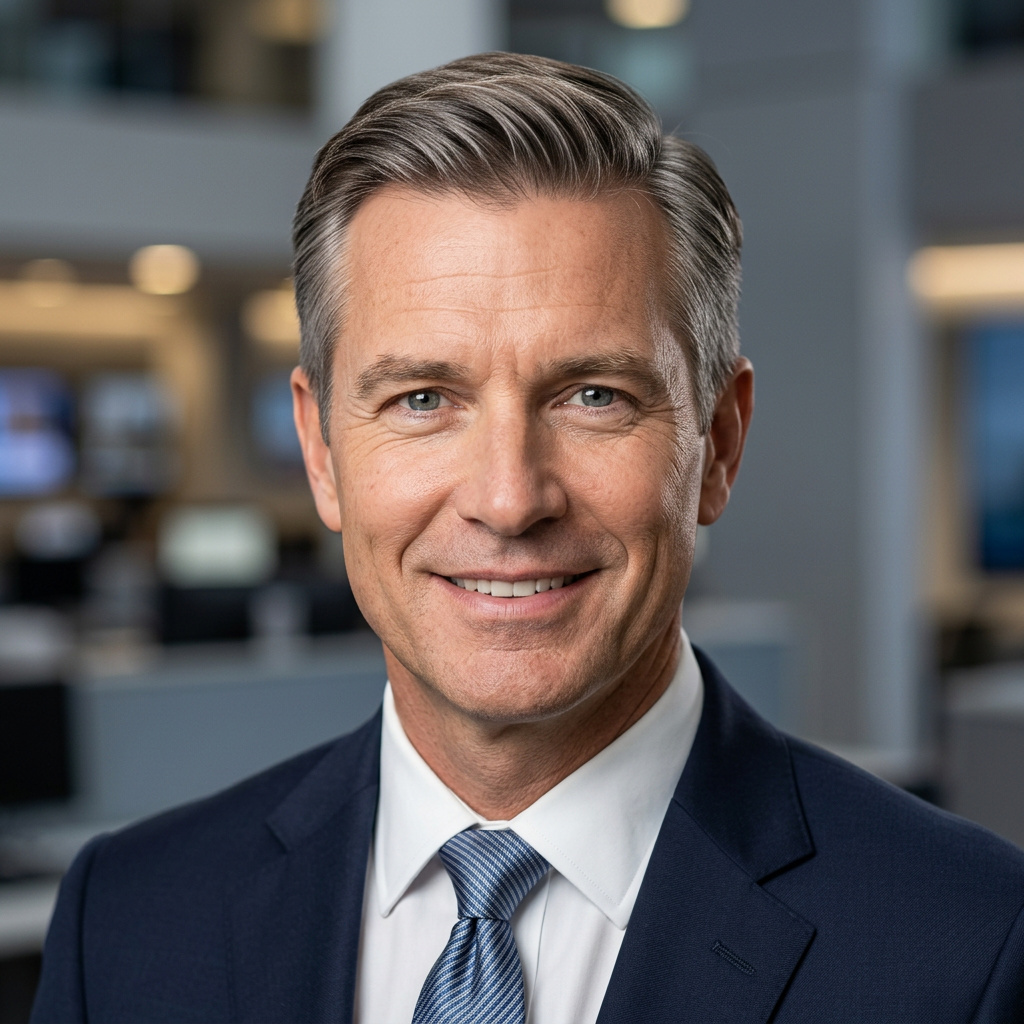
Henry Kissinger: Controversies, Nobel Prize, and Legacy
Few figures in American history spark as much debate as Henry Kissinger. A Jewish refugee who fled Nazi Germany, he rose to become the most powerful diplomat of the Cold War — and one of its most divisive. This article traces his journey from Fürth to the White House, examines the realpolitik that defined his career, and weighs the moral controversies that shadow his legacy.
Born: May 27, 1923 ·
Died: November 29, 2023 ·
Nobel Peace Prize: 1973 ·
Secretary of State: 1973–1977 ·
National Security Advisor: 1969–1975
Quick snapshot
- Born May 27, 1923 in Fürth, Germany (Britannica)
- Served as National Security Advisor (1969–1975) and Secretary of State (1973–1977) (Britannica)
- Awarded 1973 Nobel Peace Prize for Paris Peace Accords (Britannica)
- Extent of direct role in covert operations remains debated (Britannica)
- Whether his policies intentionally prolonged the Vietnam War is contested (The New York Times)
- Exact net worth from private consulting fees is not publicly known (Britannica)
- 1923: Born in Fürth, Germany (Britannica)
- 1969: Appointed National Security Advisor (Britannica)
- 1973: Awarded Nobel Peace Prize (Britannica)
- 2023: Died at age 100 (The New York Times)
- Scholars continue to debate his moral legacy and policy impact (Georgia Tech News Center)
- Declassified archives may further clarify his role in covert operations (Georgia Tech News Center)
- His realpolitik framework remains influential in modern diplomacy (POLITICO)
The following table summarizes key biographical details.
| Attribute | Detail |
|---|---|
| Full name | Henry Alfred Kissinger |
| Born | May 27, 1923, Fürth, Germany |
| Died | November 29, 2023, Kent, Connecticut, U.S. |
| National Security Advisor | 1969–1975 |
| Secretary of State | 1973–1977 |
| Nobel Peace Prize | 1973 (shared with Le Duc Tho) |
What did Henry Kissinger do that was controversial?
Bombing of Cambodia and Laos
- Kissinger authorized secret bombing campaigns in Cambodia from 1969 to 1970, expanding the Vietnam War into a neutral country (The New York Times)
- Britannica states the bombing drew accusations that Kissinger broke international law (Britannica)
- The secret bombing of Cambodia is one of the most frequently cited controversies associated with Kissinger (The New York Times)
Kissinger’s realpolitik approach — prioritizing national interest over international law — produced a pattern: the same pragmatism that opened China also authorized secret bombing campaigns that killed tens of thousands of civilians in Cambodia.
Support for Pinochet coup in Chile
- Kissinger allegedly backed the 1973 Chilean coup that brought Augusto Pinochet to power (Britannica)
- Britannica says Kissinger was criticized for endorsement via inaction of anti-democratic activities by right-wing Latin American governments (Britannica)
- The Washington Diplomat linked Kissinger’s realpolitik with destructive outcomes in Chile (The Washington Diplomat)
Role in Bangladesh genocide
- Britannica says critics blamed Kissinger for U.S. policy connected to atrocities in Bangladesh in 1971 (Britannica)
- Critics also tied Kissinger to the Indonesian invasion of East Timor in 1975 (Britannica)
- Kissinger was criticized for endorsement via inaction of anti-democratic activities by right-wing Latin American governments (Britannica)
The implication: Kissinger’s willingness to circumvent legal norms for strategic gain created a template that outlasted his tenure.
What was Henry Kissinger famous for?
Architect of détente
- Kissinger served as National Security Advisor under President Richard Nixon and later as Secretary of State (Britannica)
- He was a key figure in opening relations with China, making a secret trip in 1972 that paved the way for Nixon’s visit (Britannica)
- Kissinger was instrumental in negotiating the end of the Vietnam War through the Paris Peace Accords (Britannica)
Triangular diplomacy with China and USSR
- Kissinger’s triangular diplomacy leveraged the Sino-Soviet split to improve U.S. relations with both communist powers (Britannica)
- His secret trip to China in July 1971 was a diplomatic masterstroke that reshaped global alliances (Britannica)
- Georgia Tech experts described Kissinger as a paradigmatic scholar-practitioner whose work bridged academia and foreign policymaking (Georgia Tech News Center)
Paris Peace Accords
- Kissinger was instrumental in negotiating the Paris Peace Accords, which established a ceasefire in Vietnam in 1973 (Britannica)
- The accords led to the withdrawal of U.S. combat forces from Vietnam (Britannica)
- Critics have long accused Kissinger of helping sabotage Vietnam peace talks in 1968 to aid Richard Nixon’s election campaign (Britannica)
Kissinger’s fame rests on three pillars: détente with the Soviet Union, the opening of China, and the end of U.S. combat in Vietnam. Each achievement, however, carries a shadow — critics argue the methods undermined the moral authority they claimed to serve.
The pattern: strategic victories were often achieved through opaque and morally ambiguous tactics.
Why did Kissinger win the Nobel Peace Prize?
Paris Peace Accords and Vietnam ceasefire
- Kissinger shared the 1973 Nobel Peace Prize with Le Duc Tho for negotiating the Paris Peace Accords, which established a ceasefire in Vietnam (Britannica)
- The award was for the January 1973 agreement that ended U.S. combat involvement in Vietnam (Britannica)
Controversy and criticism
- The Nobel Peace Prize award itself was highly controversial, with critics calling it premature or undeserved (Britannica)
- Le Duc Tho declined the prize, becoming the only person to voluntarily refuse a Nobel Peace Prize (Britannica)
- Two Nobel committee members resigned in protest over the award (Britannica)
The catch: Kissinger accepted an award that many considered hollow, a fact that dogged his reputation for decades.
What is the Kissinger theory?
Realpolitik and balance of power
- Kissinger’s approach is widely summarized as realpolitik — diplomacy driven by national interest and power rather than morality or ideology (POLITICO)
- Rutgers University says Kissinger did not invent realpolitik but became its best-known U.S. exponent and practitioner (Rutgers University)
- Kissinger’s theory emphasizes pragmatic, interest-based foreign policy and advocated for a multipolar world to maintain stability (Britannica)
Triangular diplomacy concept
- Triangular diplomacy leveraged the Sino-Soviet split to improve U.S. relations with both communist powers (Britannica)
- This strategy allowed the U.S. to play China and the Soviet Union against each other, enhancing American strategic position (Britannica)
- Rutgers University says Kissinger’s hard-headed realpolitik opened the door to a later reassertion of human rights in U.S. foreign policy (Rutgers University)
The pattern: by prioritizing power over principle, Kissinger created a framework that later administrations could use to justify both pragmatism and abuse.
Who is the only person to refuse the Nobel Peace Prize?
Le Duc Tho’s refusal
- Le Duc Tho was the only person to voluntarily decline a Nobel Peace Prize (Britannica)
- He cited the lack of peace in Vietnam as his reason for refusing the award (Britannica)
- Two Nobel committee members resigned in protest over the award to Kissinger and Le Duc Tho (Britannica)
Reasons and aftermath
- Le Duc Tho argued that the Paris Peace Accords had not actually brought peace to Vietnam (Britannica)
- The war continued until the fall of Saigon in 1975, validating his refusal (Britannica)
- Kissinger accepted the prize, which became a lasting source of controversy in his legacy (Britannica)
Le Duc Tho’s refusal exposed the fundamental flaw in the award: the peace it celebrated did not exist. For Kissinger, accepting the prize meant owning a symbol that many saw as hollow — a burden that followed him for the next 50 years.
The implication: the Nobel award became a permanent asterisk on Kissinger’s résumé, a reminder of the gap between diplomatic achievement and actual peace.
Who did the Viet Cong fear most?
Role of Kissinger in negotiations
- Kissinger’s secret negotiations and bombing campaigns were feared by the Viet Cong (Britannica)
- The Viet Cong feared the Christmas bombing of 1972 and the prospect of a negotiated settlement unfavorable to them (Britannica)
- Kissinger’s hardline negotiating style and willingness to use overwhelming force created a reputation that preceded him (The New York Times)
Military strategies under Nixon
- The Christmas bombing of 1972 (Operation Linebacker II) was the most intense bombing campaign of the Vietnam War (Britannica)
- Kissinger’s secret negotiations and bombing campaigns were designed to force the North Vietnamese to the negotiating table (Britannica)
- The Viet Cong feared the Christmas bombing of 1972 and the prospect of a negotiated settlement unfavorable to them (Britannica)
The pattern: Kissinger’s mix of back-channel talks and brute force created a reputation that preceded him into every negotiation.
Which president removed the U.S. from Vietnam?
President Gerald Ford and the fall of Saigon
- President Gerald Ford oversaw the final evacuation of U.S. forces in 1975 (Britannica)
- The fall of Saigon on April 30, 1975 marked the end of U.S. involvement in Vietnam (Britannica)
- Ford authorized Operation Frequent Wind, the helicopter evacuation of U.S. personnel and Vietnamese allies (Britannica)
Nixon’s earlier withdrawal process
- Richard Nixon had begun the withdrawal under the Vietnamization policy, which aimed to transfer combat responsibilities to South Vietnamese forces (Britannica)
- Kissinger’s Paris Peace Accords in 1973 provided the framework for U.S. withdrawal (Britannica)
- By the time Ford took office in August 1974, most U.S. combat forces had already left Vietnam (Britannica)
The catch: the much‑heralded peace accords failed to produce lasting peace, leaving a bitter final image of America’s longest war.
Timeline: Key events in Kissinger’s life
- 1923 — Born in Fürth, Germany (Britannica)
- 1938 — Fled to the United States (Britannica)
- 1954 — Earned PhD from Harvard (Britannica)
- 1969 — Appointed National Security Advisor by Nixon (Britannica)
- 1972 — Secret trip to China, paved way for Nixon visit (Britannica)
- 1973 — Became Secretary of State; awarded Nobel Peace Prize (Britannica)
- 1975 — Fall of Saigon; end of U.S. involvement in Vietnam (Britannica)
- 2023 — Died at age 100 (The New York Times)
The pattern: each milestone in his career also carried the seeds of the controversies that would follow.
Clarity: What’s confirmed and what’s unclear
Confirmed facts
- Kissinger’s birth and death dates are verified (Britannica)
- Offices held: National Security Advisor (1969–1975) and Secretary of State (1973–1977) (Britannica)
- Nobel Peace Prize award in 1973 (Britannica)
- Secret bombing of Cambodia authorized under his watch (The New York Times)
- Key role in opening relations with China (Britannica)
What’s unclear
- Extent of his direct role in covert operations remains debated (Britannica)
- Whether his policies intentionally prolonged the Vietnam War is contested (The New York Times)
- Exact net worth due to private consulting fees is not publicly known
- Whether the secret bombing of Cambodia violated international law remains a legal question (Britannica)
- The full extent of Kissinger’s influence on Nixon’s foreign policy decisions is still analyzed by historians (The New York Times)
The implication: the line between confirmed fact and contested allegation remains thin, especially regarding covert actions and legal boundaries.
Quotes on Kissinger’s legacy
“Power is the ultimate aphrodisiac.”
— Henry Kissinger
“The task of the leader is to get his people from where they are to where they have not been.”
— Henry Kissinger
“The verdict is guilty. The question is whether the crimes were those of a mind or a system.”
— Christopher Hitchens, critic of Kissinger’s legacy
Kissinger’s own words reveal a man who saw power as an end in itself. Hitchens’ verdict captures the central question: was Kissinger a uniquely ruthless individual, or simply the most effective practitioner of a system that rewards pragmatism over principle?
The pattern: the quotes highlight the tension between Kissinger’s personal philosophy and the systemic outcomes of his policies.
Pros and cons of Kissinger’s approach
Upsides
- Opened diplomatic relations with China, reshaping global alliances (Britannica)
- Negotiated détente with the Soviet Union, reducing Cold War tensions (Britannica)
- Ended U.S. combat involvement in Vietnam through the Paris Peace Accords (Britannica)
- His realpolitik framework provided a coherent strategic doctrine for U.S. foreign policy (POLITICO)
Downsides
- Authorized secret bombing of Cambodia, expanding war into a neutral country (The New York Times)
- Allegedly backed the 1973 Chilean coup that brought a dictator to power (Britannica)
- Critics blame him for U.S. policy connected to atrocities in Bangladesh and East Timor (Britannica)
- His fixation on American power came at the cost of principles, norms, and values (Georgia Tech News Center)
Six major achievements, one pattern: Kissinger’s strategic wins came with moral costs that his defenders and critics still debate. The trade-off between pragmatism and principle defines his legacy more than any single policy.
aish.com, reddit.com, goodreads.com, reddit.com, politico.com, henryakissinger.com
His tenure as National Security Advisor and Secretary of State remains as divisive today as it was then, with Henry Kissingers controversial legacy continuing to spark debate among historians.
Frequently asked questions
What was Henry Kissinger’s net worth?
Kissinger’s net worth was estimated at several million dollars, derived from his government salary, consulting fees, book royalties, and speaking engagements. The exact figure is not publicly known due to the private nature of his consulting work.
What books did Henry Kissinger write?
Kissinger wrote several influential books, including “Diplomacy” (1994), “World Order” (2014), “White House Years” (1979), “Years of Upheaval” (1982), and “Years of Renewal” (1999). His works are considered essential reading on international relations and diplomacy.
What was Henry Kissinger’s religion?
Kissinger was born Jewish in Fürth, Germany, and his family fled Nazi persecution in 1938. He later identified as Jewish but was not known to be particularly observant in his adult life.
Who was Henry Kissinger’s wife?
Kissinger was married twice. His first wife was Ann Fleischer, with whom he had two children. He later married Nancy Maginnes, a former aide to New York Governor Nelson Rockefeller, in 1974.
How old was Henry Kissinger when he died?
Kissinger was 100 years old when he died on November 29, 2023. He was born on May 27, 1923.
What is realpolitik?
Realpolitik is a system of politics based on practical and material factors, rather than on moral or ideological considerations. Kissinger became its best-known American exponent, applying it to Cold War diplomacy by prioritizing national interest over ethical concerns.
Did Henry Kissinger support the Vietnam War?
Kissinger supported U.S. involvement in Vietnam as a strategic necessity during the Cold War. He negotiated the Paris Peace Accords that ended U.S. combat involvement, but critics argue his policies prolonged the war and expanded it into neighboring countries.
For readers interested in other influential figures who shaped political discourse, see our profiles on Naomi Klein: Biography, Books, and Political Views and Margaret Trudeau: From First Lady to Mental Health Advocate.
More related posts
 Daryl Walking: Daryl Dixon’s Character Guide & Spinoff
 Gaming Corner Zap-Internet – Fiber for Low Latency Gaming
 Brody Jenner: Family, Estrangement, Net Worth & More
 June Carter Cash: Biography, Sobriety Role, Death & Legacy
 Real Estate License Ontario: Costs, Exam & Timeline
 Lars Ulrich Biography: Health, Net Worth, Firing Rumors
 What Kills Cold Sores Instantly – Proven Ways to Speed Healing
 Best Mid Size SUV in Canada: Honda Passport #1 for 2026