Pink Panther: Diamond, Cartoon, Franchise & Slang
Wait — the Pink Panther isn’t actually a panther? Most people picture a cool cartoon cat slinking across the screen, but the name started with something else entirely: a diamond. What began as a jewel in a 1963 comedy wound up as an Oscar-winning animated mascot, and the term also took on meanings in espionage and street slang.
Total films in franchise: 11 ·
Year of first film: 1963 ·
Creator of original character: Blake Edwards ·
Number of Oscar-winning animated shorts: 1 ·
Inspector Clouseau portrayals: 4 actors
Quick snapshot
- Fictional large pink diamond (Wikipedia (encyclopedic reference))
- Central object in the 1963 film (Wikipedia (encyclopedic reference))
- Appears in credits of many films except A Shot in the Dark and Inspector Clouseau (Wikipedia (film series documentation))
- Silent, pink panther with a cool demeanor (Wikipedia (character history))
- Created by Friz Freleng (Wikipedia (character history))
- Won an Oscar for short ‘The Pink Phink’ (Wikipedia (encyclopedic reference))
- 11 films from 1963 to 2009 (Wikipedia (franchise records))
- Inspector Clouseau as main character (Wikipedia (film series records))
- Reboots with Steve Martin in 2006 and 2009 (Wikipedia (franchise records))
- Espionage code name for high-value operations
- Street term for pink ecstasy tablets
- Refers to theft of high-value goods
The Pink Panther is simultaneously a priceless gem, a mute cartoon cat, a bumbling French inspector’s nemesis, and a term for pink ecstasy tablets. Few brands sustain four entirely separate identities for six decades.
These facts summarize the franchise’s core details.
| Fact | Detail |
|---|---|
| First film | The Pink Panther (1963) |
| Creator | Blake Edwards |
| Animated shorts debut | 1964, ‘The Pink Phink’ |
| Total theatrical films | 11 |
| Most recent film | The Pink Panther 2 (2009) |
| Primary actor (classic) | Peter Sellers |
What is The Pink Panther supposed to be?
The Pink Panther diamond
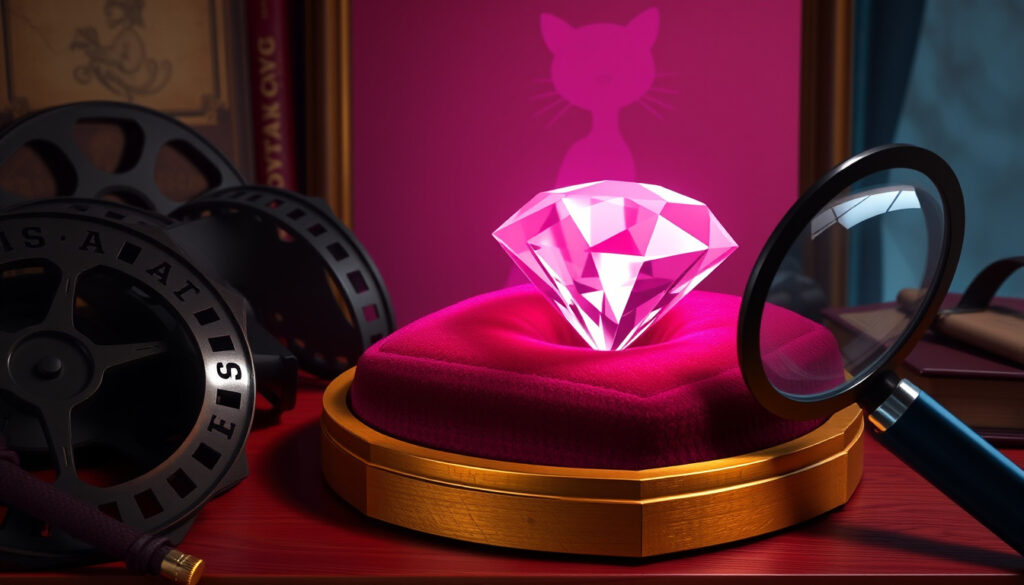
The name “Pink Panther” originally belonged to a fictional pink diamond, not an animal. In the 1963 film, the jewel contains a flaw that, when viewed from a certain angle, looks like a “figure of a springing panther,” according to Wikipedia (encyclopedic reference). The entire plot revolves around a jewel thief’s attempt to steal this enormous pink stone. The diamond appears in the opening and closing credits of every film in the original series except A Shot in the Dark and Inspector Clouseau, per the same source. In the real world, pink diamonds are natural diamonds with a blush of pink and can command astronomical prices — the Graff Pink Diamond sold for $46 million in 2010, notes Sylvie Jewelry (jewelry industry blog).
The animated character
The pink cartoon panther that most people recognize was created for the film’s opening title sequence. Friz Freleng, the legendary animator behind Looney Tunes, designed a silent, lanky, cool-tempered panther that first appeared slinking through the 1963 credits, as recorded by Wikipedia (character history). The character proved so popular that it spun off into its own series of theatrical shorts starting with “The Pink Phink” in 1964, which won the Academy Award for Animated Short Film. Over 100 cartoon shorts and multiple TV series followed, making the animated panther the franchise’s most visible ambassador.
The film franchise
The Pink Panther film franchise spans 11 theatrical releases from 1963 to 2009. At its heart is Inspector Jacques Clouseau, the bumbling French detective played most famously by Peter Sellers. Wikipedia (film series records) confirms that only the first film and The Return of the Pink Panther actually feature the diamond as a plot element; later installments kept the name even when the jewel was absent. The franchise was reborn with Steve Martin in 2006 and again in 2009.
Who was the original Pink Panther?
Blake Edwards and the film series
Director Blake Edwards co-created the franchise with writer Maurice Richlin. Their 1963 film introduced both the Pink Panther diamond and Inspector Clouseau. Edwards went on to direct several sequels, shaping the comedic tone that defined the series through the 1970s. The Wikipedia entry on the character (film history) credits Edwards as the creative force who tied the jewel, the detective, and the cartoon into one enduring property.
Peter Sellers as Inspector Clouseau
British comedian Peter Sellers played Inspector Jacques Clouseau in five Pink Panther films between 1963 and 1978. His portrayal — a French detective with a disastrous accent, catastrophic timing, and unshakeable confidence — became the comedy anchor of the series. Sellers’ Clouseau is widely regarded as one of cinema’s great comic performances. (Find more about Sellers’ career in our Peter Sellers profile.)
Friz Freleng and the animated shorts
Animation director Friz Freleng took the panther from credit-sequence decoration to star. Freleng gave the character its signature traits: the slow, confident stride, the minimalist jazz score by Henry Mancini, and the silent communication that made the panther universally understood. The first short, “The Pink Phink” (1964), won an Oscar, and the character has appeared in roughly 124 theatrical shorts and more than a dozen TV specials.
The pattern: The “original Pink Panther” is actually three originals — a diamond, a director’s film, and an animator’s cartoon — all born within two years of each other, all sharing a name that audiences now treat as one thing.
Is The Pink Panther a woman?
Character gender
The Pink Panther is male. Though the design is slender and stylized, the character has always been referred to as male by creators and in official materials. The panther’s androgynous appearance — smooth pink body, no pronounced features — often leads viewers to wonder, but the character’s gender is established as masculine, per Wikipedia (character description).
Voice and design origins
The character has never spoken, nor has a female voice actor been attached. The silent treatment was deliberate: Freleng designed the panther to communicate entirely through body language and expression. The design was inspired by a panther’s natural elegance, not tied to any specific human gender presentation.
The takeaway: The panther’s ambiguity is a design feature, not a mystery. Its lack of gendered markers makes it more, not less, universal as a mascot.
What is Pink Panther slang for?
Slang in espionage
In intelligence circles, “Pink Panther” has been used as a code name for high-value targets or operations. The exact origins are murky, but the phrase’s association with a priceless diamond makes it a natural fit for classified references to valuable assets.
Drug references
On the street, “Pink Panther” is slang for a type of synthetic drug — typically pink-colored ecstasy tablets (MDMA). The term likely borrows the franchise’s association with the color pink and the idea of a “panther” as something potent. This usage has been documented in law enforcement reports and drug education materials.
Pop culture usage
The name also refers to individuals involved in high-value theft — a direct nod to the fictional diamond heist plot. The phrase “Pink Panthers” has been applied to real-world organized crime groups specializing in jewelry theft, drawing on the glamorous heist mythology of the films.
The catch: Slang usage has drifted so far from the original diamond that many people now encounter the term in contexts — police blotters, drug warnings, spy novels — that have nothing to do with a cartoon cat or a Peter Sellers comedy.
How many Pink Panthers are there?
Film installments
The core film franchise includes 11 theatrical releases: the original series from 1963 to 1993 (8 films, 5 with Peter Sellers) and the Steve Martin reboot series (2 films, 2006-2009). One additional film, The Pink Panther (2006), is the first of the rebooted series, and The Pink Panther 2 (2009) is the most recent theatrical release, per Wikipedia (franchise records).
Animated series
The Pink Panther animated universe is vast. Beyond the short films, the character has starred in multiple TV series including The Pink Panther Show (1969-1978), Pink Panther and Sons (1984-1985), and The Pink Panther (1993-1996). The complete animated library runs well over 100 individual shorts produced by DePatie-Freleng Enterprises and later MGM Animation.
Comic books and merchandise
The Pink Panther has appeared in comic books published by Gold Key, Marvel, and others, plus board games, video games, toys, clothing, and even localized versions that change the character’s name — he’s Paulchen Panther in Germany, for instance, according to Wikipedia (localized naming).
The implication: The total number of “Pink Panthers” is functionally uncountable when you factor in every product, TV episode, and regional variant. The franchise is less a series than a continuous cultural presence spanning six decades.
The Pink Panther name now means so many things — a diamond, a cop, a cartoon, a pill — that its original meaning is almost irrelevant. Audiences born after 2000 may know only the cartoon character, while older generations remember the Clouseau comedies. The franchise survives not because of any single element but because each generation finds its own panther.
Timeline: The life of the Pink Panther
- 1963: Release of The Pink Panther film, introducing the diamond and Inspector Clouseau.
- 1964: First animated short “The Pink Phink” wins Academy Award.
- 1969-1978: Original film series continues with Peter Sellers.
- 1982-1993: Later films without Sellers, including Trail of the Pink Panther and Son of the Pink Panther.
- 1990s-2000s: Animated TV series and specials continue the cartoon character’s presence.
- 2006-2009: Reboot films starring Steve Martin.
What’s confirmed and what’s unclear
Confirmed facts
- The Pink Panther media franchise includes 11 films.
- The animated character is male.
- The first film was released in 1963.
- The original title refers to a flaw in a pink diamond.
What’s unclear
- Exact number of all animated shorts produced (some unlisted).
- Whether slang usage predates the film franchise (most evidence suggests it followed).
- Precise total of localized character names across all languages.
- Whether “Pink Panther” as slang for synthetic drug originates from the film franchise (plausible but unconfirmed).
Key voices on the franchise
The Pink Panther diamond has a flaw that, when viewed correctly, looks like a figure of a springing panther.
— Wikipedia (Pink Panther character page)
Only the first Pink Panther film and The Return of the Pink Panther featured the diamond in the original film series.
— Wikipedia (film series documentation)
For fans of Peter Sellers, the real Pink Panther remains the bumbling inspector; for others, it’s the silent cartoon.
— MaplePolicy editorial analysis
For anyone researching or writing about the Pink Panther, the key is specificity: are you talking about the 1963 jewel heist film, the silent cartoon superstar, the 11-film series, or the street slang for pink ecstasy? One name, four distinct identities. For fans of Peter Sellers and Friz Freleng, the franchise’s enduring trick is that each version feels like the real Pink Panther.
For fans of classic animation franchises, you might also enjoy our Scooby-Doo guide — another cartoon institution with more twists than you’d expect.
Editor’s note: This article was updated with the latest franchise information available. Film counts reflect all theatrical releases as of 2024.
reddit.com, reddit.com, nektanewyork.com, langerman-diamonds.com, pinkpanther.fandom.com, angara.com, facebook.com, en.wikipedia.org, youtube.com, reddit.com
The diamond was later linked to an international jewelry theft ring, commonly referred to as the Pink Panther crime syndicate.
Frequently asked questions
What is the Pink Panther diamond?
The Pink Panther diamond is a fictional large pink diamond that appears in the 1963 film The Pink Panther. The diamond contains a flaw that looks like a springing panther when viewed from a certain angle. It is not a real gem, but real pink diamonds do exist and can be extremely valuable.
Who played Inspector Clouseau?
Peter Sellers played Inspector Jacques Clouseau in five Pink Panther films from 1963 to 1978. Other actors who have portrayed Clouseau include Alan Arkin (in Inspector Clouseau, 1968), Roger Moore (in Trail of the Pink Panther, 1982, in a minor role), and Steve Martin (in the 2006 and 2009 reboot films).
Is the Pink Panther based on a real animal?
No. The Pink Panther is an animated character created by Friz Freleng for the 1963 film’s opening credits. The character is a stylized, anthropomorphic panther, not a representation of a real animal species. Real panthers are black or dark-colored big cats, not pink.
What is the plot of the first Pink Panther film?
The 1963 film The Pink Panther follows a jewel thief, Sir Charles Lytton (David Niven), who plots to steal the famous Pink Panther diamond. He is pursued by the bumbling French inspector Jacques Clouseau (Peter Sellers). The film is a comedy of errors involving mistaken identities, romantic entanglements, and a famous lakeside seduction scene.
Why is the Pink Panther called ‘Pink’?
The character and diamond are called “Pink” because they are pink-colored. The diamond is described as having a pink hue, and the animated panther is colored pink for visual distinctiveness and charm. The original title refers to the diamond’s color.
Are all Pink Panther films comedies?
Yes, all Pink Panther films are comedies. The original series, directed by Blake Edwards, is known for slapstick, farce, and Peter Sellers’ physical comedy. The Steve Martin reboots are also comedies. The animated shorts are also comedic, relying on visual gags and silent comedy.
How many Pink Panther animated shorts are there?
There are over 100 animated Pink Panther shorts produced by DePatie-Freleng Enterprises and later MGM. The exact count is around 124, though some are unlisted or unreleased. The character also appears in multiple TV series and specials.
More related posts
 Bobby Deol: Age, Wife, Net Worth & Career Comeback
 Nick Kypreos: Career, Concussion, Net Worth, and Current Role
 Jasmine Sandlas: Biography, Songs, Age, and Relationship
 Mark Twain: Biography, Quotes, and Cause of Death
 Milo Manheim: Age, Relationships, and Career
 Robert Pattinson Biography: Career, Relationships & Health
 Emily VanCamp: Biography, Net Worth & Career Updates
 Howard Hughes: Biography, OCD, and Downfall